



Hearing loud movement in the attic after midnight can leave any homeowner wondering what to do next. The noise might sound like footsteps, scratching, or objects being dragged across the ceiling. When raccoons are suspected, searching for a raccoon removal service near me is often an early step toward resolving the situation. However, finding nearby […]
Hearing loud movement in the attic after midnight can leave any homeowner wondering what to do next. The noise might sound like footsteps, scratching, or objects being dragged across the ceiling.
When raccoons are suspected, searching for a raccoon removal service near me is often an early step toward resolving the situation.
However, finding nearby assistance is only part of the decision. Understanding what makes a wildlife removal approach safe and effective is equally important.
Start by Understanding the Problem
Not every attic noise comes from a raccoon. Squirrels, birds, and other animals can create similar disturbances.
Raccoons are generally larger than many common attic visitors, so their movement may sound heavier.
Still, sound alone cannot reliably identify the animal.
Look for Physical Evidence
Check accessible exterior areas for displaced roof vents, damaged soffits, or unusual openings.
Other warning signs include droppings, disturbed garbage, and repeated wildlife activity near the roof.
Avoid climbing onto unsafe surfaces or entering confined spaces where an animal may be present.
Questions Worth Asking Before Removal Begins
When evaluating a raccoon removal service near me, homeowners should understand how the situation will be assessed and managed.
Is a Thorough Inspection Included?
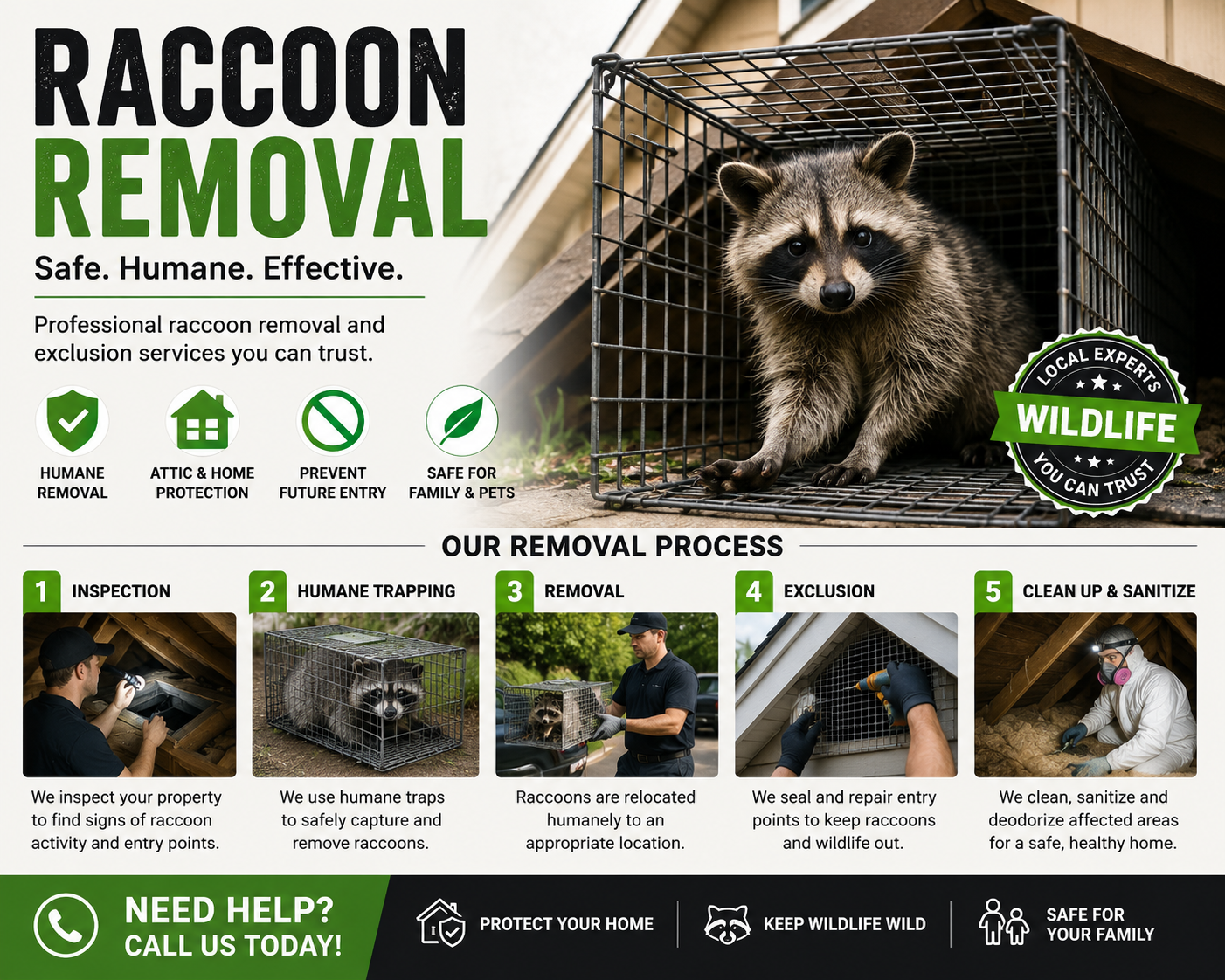
A proper inspection should investigate suspected entrances and determine whether animals are currently occupying the structure.
The inspection should also consider whether dependent young are present.
Without this information, exclusion can create unexpected problems.
Are Humane Methods Prioritized?
Responsible wildlife management avoids unnecessary injury and distress.
Methods should be selected according to the animal’s location, behaviour, and nesting circumstances.
An approach suitable for an empty den may be inappropriate when newborn raccoons are present.
Will Entry Points Be Addressed?
Removing an animal without correcting the original access point may only provide temporary relief.
Homeowners should understand which openings require attention and whether additional vulnerable areas have been identified.
What Happens to Contaminated Materials?
Raccoon droppings can contain harmful organisms, including roundworm eggs.
Safe assessment and cleaning are important considerations, especially when droppings accumulate in attics or enclosed spaces.
Warning Signs of an Incomplete Approach
Some responses focus entirely on making the animal disappear.
That can overlook the conditions that caused the intrusion.
Be cautious when a proposed approach does not include an inspection, ignores possible babies, or recommends immediately sealing every visible opening.
Similarly, attempts to frighten animals using excessive noise or hazardous substances can create additional risks.
A raccoon removal service near me should be evaluated on its overall approach rather than proximity alone.
What to Do While Waiting for Assistance
Homeowners can take several practical precautions.
Keep children and pets away from suspected nesting locations. Avoid direct contact with wildlife, even if the animal appears calm.
Do not attempt to capture a raccoon by hand.
If the animal is inside an attic, avoid blocking the entrance without confirming that all occupants can leave safely.
Remove accessible outdoor food sources when doing so does not bring you near the animal.
How to Reduce Repeat Visits
Long-term prevention is an important part of resolving wildlife conflicts.
Strengthen Vulnerable Exterior Areas
Inspect rooflines, vents, chimney openings, and soffits periodically.
Repair damaged materials promptly and check for deterioration following severe weather.
Keep Outdoor Spaces Less Attractive
Secure garbage lids, avoid leaving food outdoors, and maintain compost areas carefully.
These small habits can discourage repeated visits.
Homeowners looking for nearby raccoon removal guidance can use these considerations to make informed decisions about humane wildlife management.
Conclusion
Searching for a raccoon removal service near me should lead to more than a quick response to attic noise.
The most effective approach identifies the animal, considers nesting conditions, addresses access points, and reduces future attractants.
By asking appropriate questions and prioritizing humane practices, homeowners can resolve wildlife concerns while protecting their property and household.