



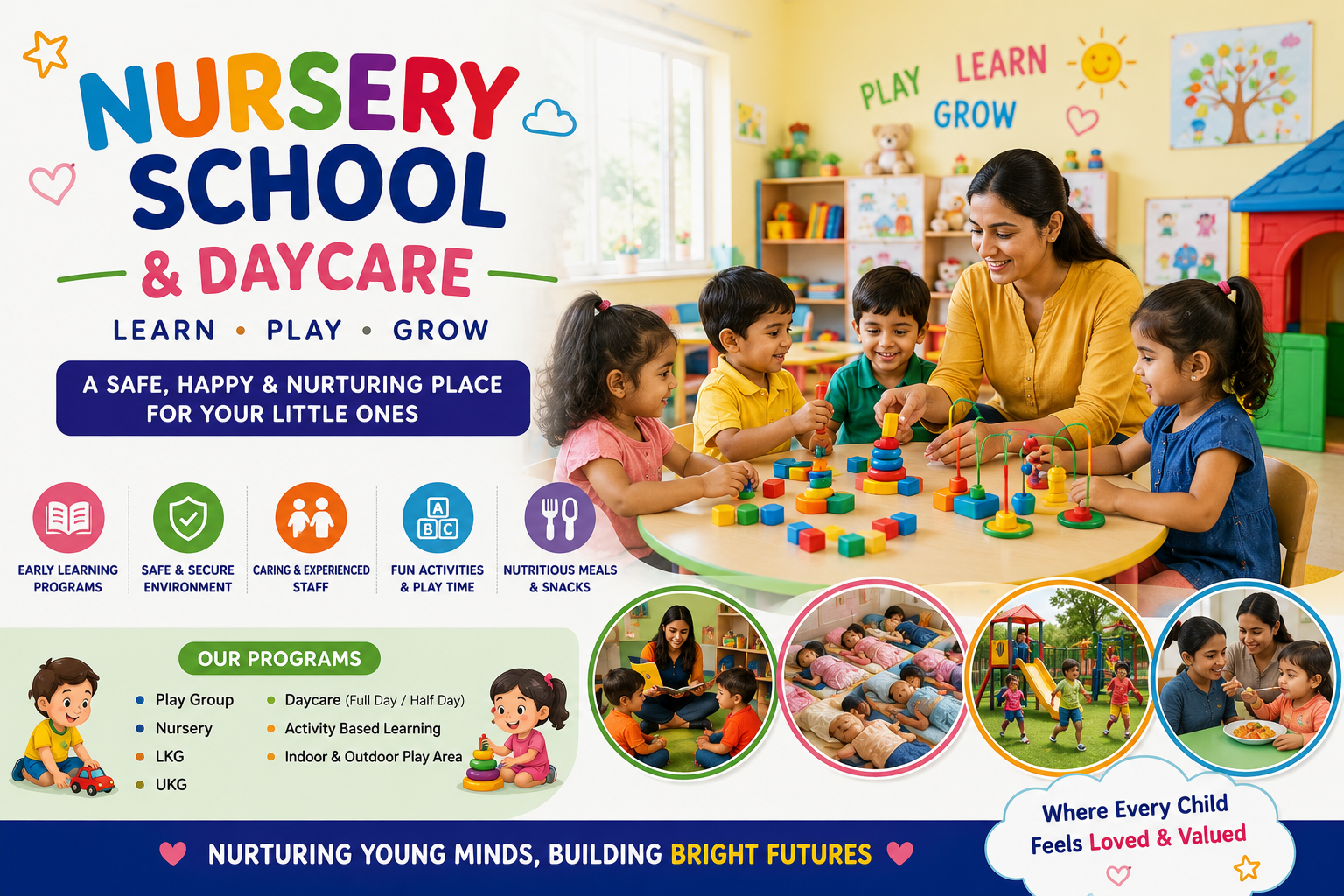
Young children feel more confident when their surroundings are familiar and daily experiences follow a reassuring rhythm. A well-organised nursery school uses predictable routines to support independence, emotional security, and meaningful learning. From morning greetings to storytelling and creative play, everyday classroom experiences contribute to children’s development in ways that extend beyond academic preparation.
Why Predictable Routines Matter
Children gradually learn to understand time through repeated experiences.
A consistent daily sequence helps them anticipate what comes next.
This familiarity can reduce uncertainty, particularly during the early stages of preschool.
Creating a Comfortable Morning Transition
Warm greetings help children move from home routines into classroom activities.
Some children enjoy joining group play immediately, while others benefit from a quieter introduction.
Educators should allow reasonable flexibility during these transitions.
Beginning the Day With Social Interaction
Morning gatherings can introduce songs, conversations, and simple group activities.
These experiences encourage children to listen, communicate, and recognise familiar routines.
Building a Sense of Community
When children participate in shared activities, they gradually understand that they belong to a group.
They learn to recognise classmates, listen to different voices, and participate respectfully.
These experiences contribute to social confidence.
Learning Through Activity Choices
A balanced nursery school day provides opportunities for individual and group exploration.
Children may choose puzzles, building materials, creative activities, or imaginative play.
Encouraging Decision-Making
Choosing between suitable activities helps children practise independence.
Educators can guide decisions while allowing children to develop personal interests.
Completing an activity and returning materials also introduces responsibility.
Supporting Language Throughout the Day
Language learning should not be limited to formal storytelling sessions.
Everyday conversations provide opportunities to introduce vocabulary and communication skills.
Making Ordinary Moments Educational
Discussing weather, describing objects, and talking about daily experiences encourage children to express ideas.
Educators can ask open-ended questions that invite thoughtful responses.
Children should have time to communicate without feeling rushed.
The Role of Meals and Rest
Meal and rest periods are important parts of a nursery routine.
Children can practise hygiene, independence, and respectful social behaviour during these moments.
Developing Healthy Habits
Simple responsibilities, such as washing hands and organising belongings, help children become more capable.
Adults should provide assistance when needed while encouraging gradual independence.
Rest arrangements should consider individual developmental requirements.
Outdoor Movement and Exploration
Movement activities provide a valuable balance to quieter classroom experiences.
Running, balancing, dancing, and supervised outdoor exploration support coordination.
Children also benefit from observing natural surroundings and interacting with peers.
Understanding Emotional Needs
Even familiar routines can sometimes feel challenging.
Children may experience frustration, tiredness, or difficulty transitioning between activities.
Responsive educators acknowledge these emotions and offer appropriate reassurance.
Choosing an Environment With Balanced Routines
Parents should ask how the daily schedule accommodates play, rest, movement, and learning.
A visit can help families understand whether routines are structured yet flexible.
Families considering early education around Sholinganallur may explore the nursery location and route before visiting.
Conclusion
A thoughtfully organised nursery school uses everyday routines to create meaningful developmental opportunities. Consistent schedules encourage emotional security, while flexible activities support creativity, independence, language, and friendships. When educators balance predictable experiences with individual attention, children can approach each day with greater confidence and curiosity, building valuable habits that support their future educational journey.
