



A copper deposit does not become an operating mine immediately after its discovery. Between identifying mineralized rock and beginning extraction lies a complex sequence of scientific investigations, engineering studies, environmental assessments, and planning decisions. Copper Mining requires this structured approach because geological potential alone cannot establish whether a deposit can be developed responsibly. Stage One: […]
A copper deposit does not become an operating mine immediately after its discovery. Between identifying mineralized rock and beginning extraction lies a complex sequence of scientific investigations, engineering studies, environmental assessments, and planning decisions. Copper Mining requires this structured approach because geological potential alone cannot establish whether a deposit can be developed responsibly.
Stage One: Identifying Geological Potential
The earliest stage involves understanding where copper-bearing formations may occur.
Geologists examine regional geological information, rock samples, and structural features to identify areas that warrant investigation.
These initial observations help guide exploration activities.
Geological Sampling
Sampling allows specialists to study mineral composition and copper concentration.
Samples may come from surface exposures, exploratory drilling, or other geological investigations.
Laboratory analysis provides information that cannot always be determined through visual inspection.
Stage Two: Investigating the Deposit
Once preliminary findings indicate mineral potential, more detailed exploration may follow.
Drilling programs collect information about underground rock formations and mineral distribution.
The resulting data helps specialists understand deposit continuity and geological complexity.
Estimating Mineral Resources
Resource estimation combines geological interpretation with sampling information.
Specialists use statistical methods and geological models to estimate the quantity and distribution of mineralized material.
These estimates contain uncertainty and may change as additional information becomes available.
Stage Three: Evaluating Technical Feasibility
Copper mining requires more than identifying a mineral deposit.
Engineering teams must consider whether extraction methods can operate safely and effectively under site-specific conditions.
Rock stability, deposit geometry, access requirements, and processing characteristics all influence feasibility.
Choosing an Extraction Method
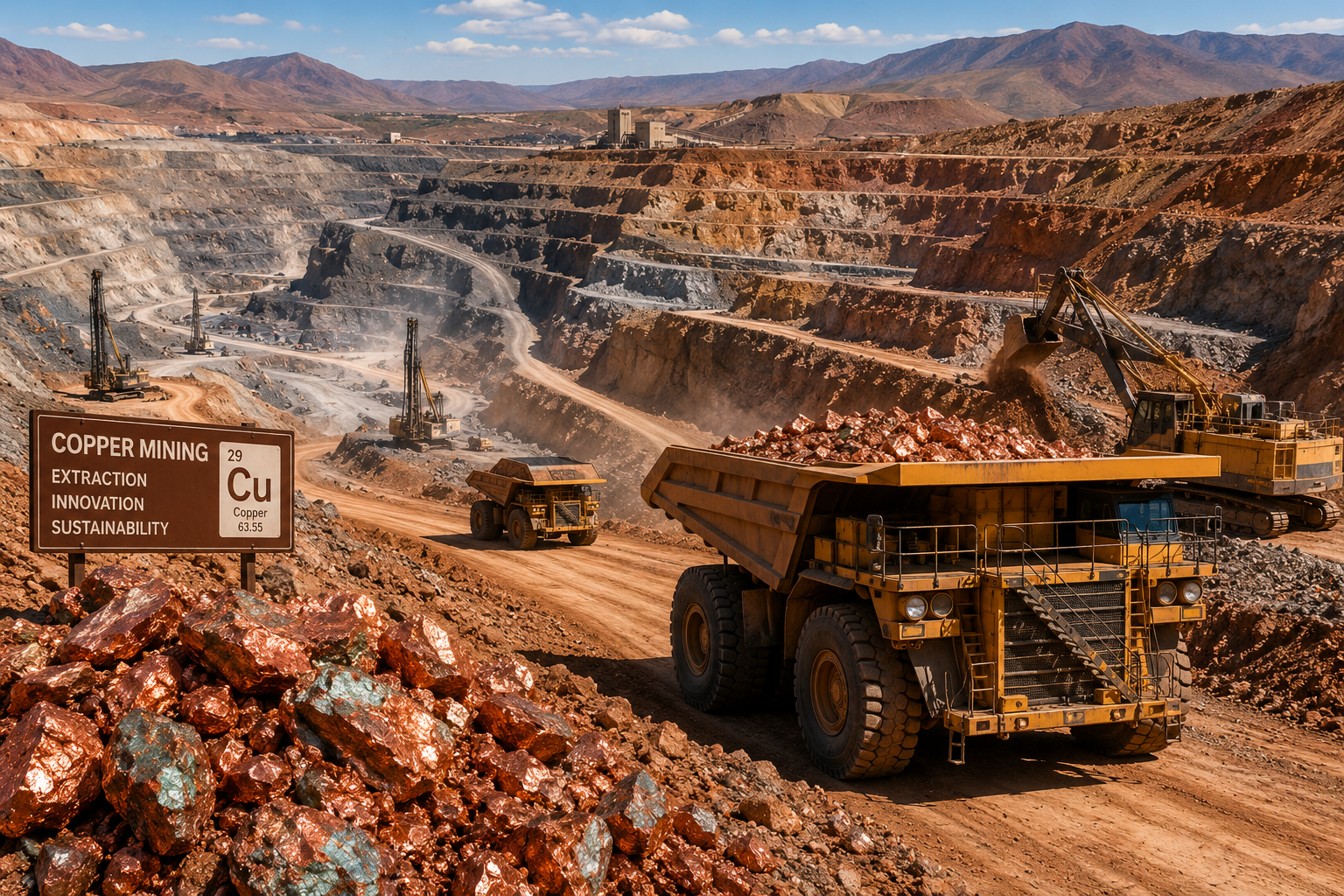
Underground and surface extraction methods have different engineering requirements.
A deposit’s depth, shape, and surrounding rock conditions help determine which approaches deserve consideration.
The selected method must also account for environmental constraints and operational risks.
Stage Four: Understanding Environmental Conditions
Environmental studies evaluate how proposed activities could interact with surrounding natural systems.
Investigations may examine water resources, habitats, soil characteristics, and existing land uses.
This information supports impact assessments and environmental management planning.
Developing Management Measures
Potential impacts must be evaluated alongside proposed prevention, mitigation, and monitoring measures.
Some risks can be reduced through engineering controls, while others may require changes to the proposed development approach.
Regulatory review helps determine whether applicable requirements have been addressed.
Stage Five: Planning Infrastructure
Mineral extraction depends on supporting infrastructure.
Access routes, ventilation systems, water-management facilities, and material-handling arrangements must be considered during planning.
The exact requirements vary according to the mining method and location.
Coordinating Operational Systems
Infrastructure components must function together.
For example, underground ventilation requirements influence access design and equipment selection.
Integrated engineering reduces the likelihood that individual systems will conflict during operation.
Stage Six: Preparing for Responsible Operations
Before extraction begins, operators must establish procedures for worker safety, equipment maintenance, environmental monitoring, and emergency response.
Training helps personnel understand site conditions and operational responsibilities.
Effective preparation supports more consistent decision-making.
Continuous Improvement
Once mining begins, actual conditions may differ from earlier estimates.
Operational monitoring provides information that can support adjustments to equipment, procedures, and management plans.
Adaptability remains important throughout extraction.
Stage Seven: Planning for Closure
Mine closure is an essential part of resource development rather than an afterthought.
Closure planning considers land stability, remaining infrastructure, water management, and future monitoring needs.
Requirements depend on site conditions and applicable regulations.
Conclusion
Copper Mining involves a series of connected decisions extending from geological discovery to long-term site management. Each stage contributes information needed to evaluate technical, environmental, and operational considerations.
Understanding this journey reveals why responsible mineral development requires patience, scientific investigation, careful engineering, and ongoing oversight.